
Before the room, before the view, before the amenities—there is arrival.
For the discerning traveler, the check-in experience is not a formality. It is the first signal of what’s to come. In a matter of minutes, a hotel communicates its values, its attention to detail, and its understanding of hospitality.
Done well, it creates ease. Done poorly, it lingers.
First Impressions Are Designed, Not Accidental
From the moment you step into a property like The Ritz Paris or Aman Tokyo, there is a sense of intentionality.
Lighting, scent, sound, and space are carefully considered. Nothing feels rushed or chaotic.
A great arrival answers unspoken questions immediately:
- Am I expected?
- Am I welcome?
- Am I in good hands?
The best hotels ensure the answer is yes—without you needing to ask.
The Psychology of Seamlessness
True luxury at check-in is not about speed alone—it’s about frictionless transition.
After a long journey, travelers are often tired, disoriented, and overstimulated. A thoughtful check-in process reduces cognitive load:
- Minimal paperwork
- Clear, calm communication
- Staff who anticipate needs before they’re voiced
At properties like Four Seasons Hotel London at Park Lane, the process often feels almost invisible—because everything has already been prepared.
Personalization: The Subtle Differentiator
Anyone can offer a welcome drink. Few can offer recognition.
The difference lies in details:
- Greeting guests by name
- Remembering preferences from past stays
- Adjusting the experience based on arrival time or purpose of visit
Luxury hospitality is not about grand gestures—it’s about relevance. The feeling that the experience was shaped for you, not just delivered to you.
Space as a Statement
The design of a check-in area speaks volumes.
Compare:
- A crowded, transactional front desk
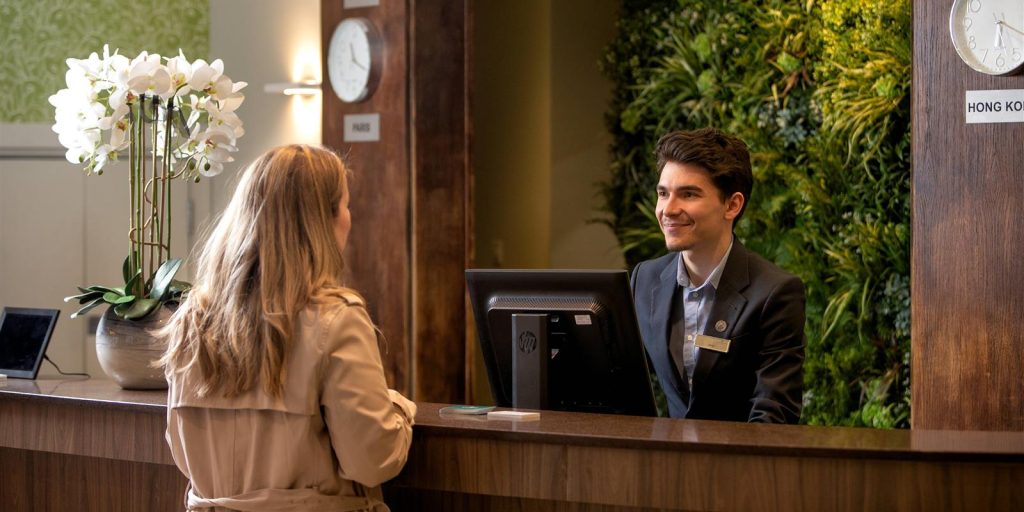
- A lounge-style reception with seating, conversation, and privacy
Hotels like Six Senses Zighy Bay and Rosewood Hong Kong reimagine arrival as a living space rather than a queue.
This shift changes everything. You’re not processed—you’re received.
Timing Is Everything
Even the best-designed check-in can fail if timing is ignored.
Great hotels understand:
- Early arrivals need flexibility
- Late arrivals need efficiency
- Every guest needs to feel prioritized
A room not being ready is forgivable. How it’s handled is what defines the experience.
The Emotional Undercurrent
Check-in is not just operational—it’s emotional.
It sets:
- Your level of trust
- Your sense of comfort
- Your expectations for the stay
A warm, composed arrival creates a psychological shift: you move from traveler to guest.
That transition is where hospitality truly begins.
When It Goes Wrong
Even small missteps can disrupt the tone:
- Long waits without acknowledgment
- Repetitive questions that suggest poor coordination
- A lack of clarity or direction
These moments create friction—and once introduced, friction is difficult to fully undo.
Why It Matters More Than You Think
Everything that follows—room service, housekeeping, concierge interactions—is filtered through the lens of that first experience.
A strong arrival:
- Builds confidence in the property
- Encourages relaxation
- Enhances perception of value
A weak one does the opposite, no matter how beautiful the hotel may be.
The Takeaway
The art of arriving is about more than efficiency. It is about intention, empathy, and precision.
The best hotels understand that check-in is not a checkpoint—it is a stage-setting moment. One that quietly defines the narrative of the entire stay.
Because in luxury travel, how you are welcomed is often more important than what you are given.
And when done right, everything that follows simply feels… effortless.