
The brochure cabin isn’t always the best cabin.
If you’ve ever flipped through a cruise line’s deck plan, you’ve probably noticed something strange. The cabins they put on the cover — the ones with the soaring balconies, the ones marked “Suite” in gold script — aren’t always the ones that experienced travelers actually request. There’s a quieter category. A handful of rooms per ship, never on the brochure, that the people who’ve sailed thirty crossings will fight to book.
I call them the hidden suites. And in this story, I’ll walk you through how to spot them, why the lines don’t market them, and the three questions to ask any cruise consultant before you put down a deposit.
Why the brochure is the wrong place to start
Cruise brochures are designed to sell. They lead with the spectacle: the wraparound terraces on Deck 14, the two-story owner’s suites, the rooms with the dedicated butler. Those are real. They are also priced for a reason most readers will close the brochure right then and there.
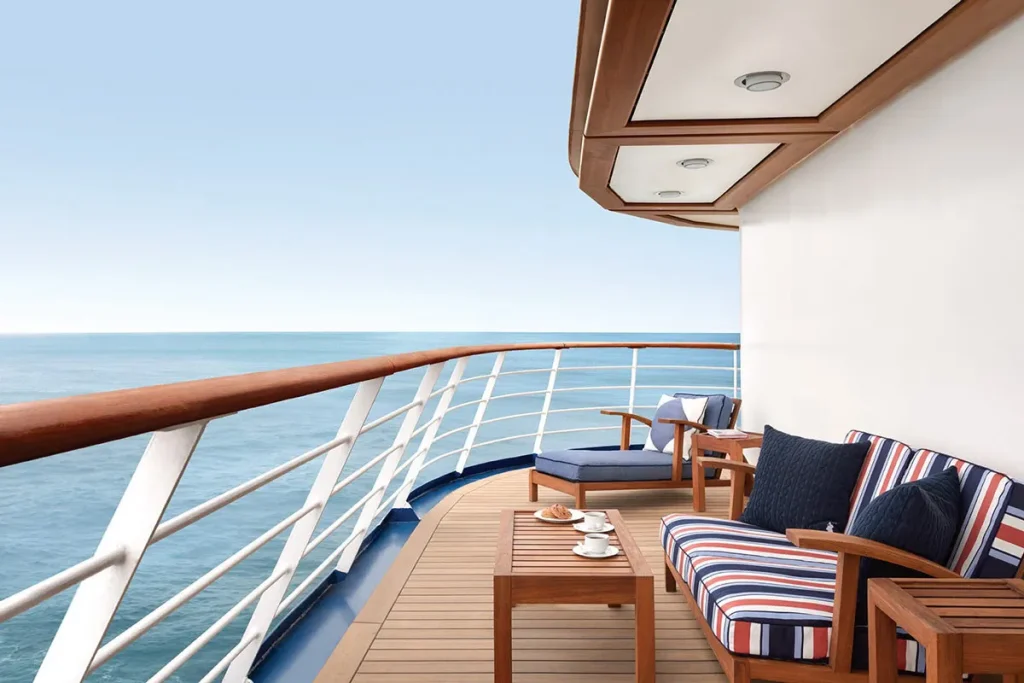
What the brochure doesn’t show is the obstructed-view suite on Deck 7 that’s twice the size of a standard balcony, four decks below the gym, with the same butler service, for less than half the marquee price. Or the aft corner on a Seabourn vessel where the wake spreads out behind you like a personal Mediterranean. These rooms exist on almost every premium ship. They just don’t photograph well from above.
The three questions to ask before you book
When a client comes to me with a cruise in mind, before we even talk about itineraries or shore excursions, I ask them three things. The answers determine whether we’re looking at the brochure suites or the hidden ones.
First: how much time will you actually spend in the cabin? If the answer is “only to sleep,” the wraparound balcony is a waste. If it’s “most afternoons, with room service and a book,” we’re optimizing for the room, not the view.
Second: are you sailing in winter or summer? On winter crossings the obstructed cabins are protected, warm, and quiet. On Caribbean summer routes, every inch of balcony matters and the brochure rooms earn their price.
Third: how long is the voyage? On a seven-day trip the cabin barely registers. On a twenty-one-day repositioning, the cabin becomes your apartment, and every square foot you can negotiate matters more than any shore excursion.
What the cruise lines don’t want you to know
The lines don’t actively hide these rooms. They just don’t market them, because they’re hard to photograph and harder to standardize. Each one is a little quirky. The marketing team needs hero shots; the hidden suites resist hero shots. That’s exactly why a real advisor can find them for you when the line’s own website can’t.
How I source them
I keep a working spreadsheet of every premium ship I’ve personally inspected or sailed on, with notes on which cabin numbers are oversized, which have obstructed but acceptable views, which suffer from engine vibration at speed, and which are directly under the gym, the buffet, or the nightclub. That sheet is six years old now. It’s the most valuable document in my business.
The bottom line
If you’re booking a cruise — whether it’s your first or your fortieth — don’t start with the brochure. Start with the question of what you want from the room itself. The hidden suite for you is the one nobody photographed.
If you’d like me to look at a specific sailing and find the hidden suite on that ship, I’m always glad to. That’s most of what I do.